

Key Takeaways
- UNAIDS said on Tuesday, November 24, that 2027 data would show more new HIV infections after US HIV contributions fell 26% between 2024 and 2025.
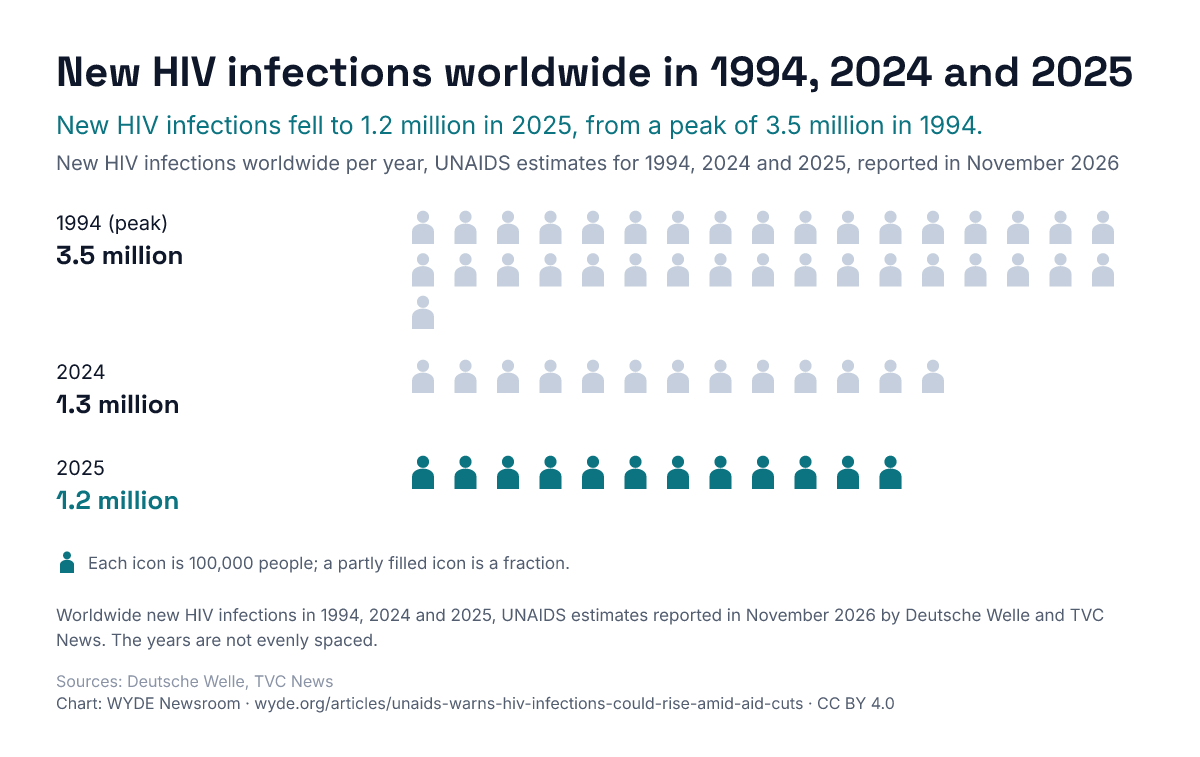
- New HIV infections fell to 1.2 million in 2025, from 1.3 million in 2024 and a peak of 3.5 million in 1994.
- The United States cut its HIV contributions by 26% between 2024 and 2025, and disbursements (money paid out) from the Global Fund to Fight AIDS, Tuberculosis and Malaria dropped 13% in 2025.
- About 570,000 people died of AIDS-related illnesses in 2025, and about 9 million people living with HIV were not receiving antiretroviral treatment, by subtraction from UNAIDS figures of 41 million and 32.1 million.
UNAIDS, the Joint United Nations Programme on HIV/AIDS, warned on Tuesday, November 24, that data released in 2027 would show more new HIV infections, after US HIV contributions fell 26% between 2024 and 2025.
New HIV infections and AIDS deaths in 2025
UNAIDS estimated that 41 million people worldwide were living with HIV in 2025, based on data from 172 countries. Of them, 32.1 million were receiving antiretroviral treatment, the life-saving HIV medicines that UNAIDS describes. The agency estimated that 1.2 million people contracted HIV in 2025, down from 1.3 million the year before and a peak of 3.5 million in 1994. Deutsche Welle and TVC News both reported those figures. Subtracting the 32.1 million receiving antiretroviral treatment from the 41 million living with HIV leaves about 9 million people, or about 22% of the total, not receiving it. Neither outlet states this figure.
Use this chart
Free to republish under CC BY 4.0: credit WYDE Newsroom and link to this article. All WYDE charts.
Credit line
Embed code
Download the chart (PNG, 1200 by 757) · Square version for social posts (1080 by 1080)
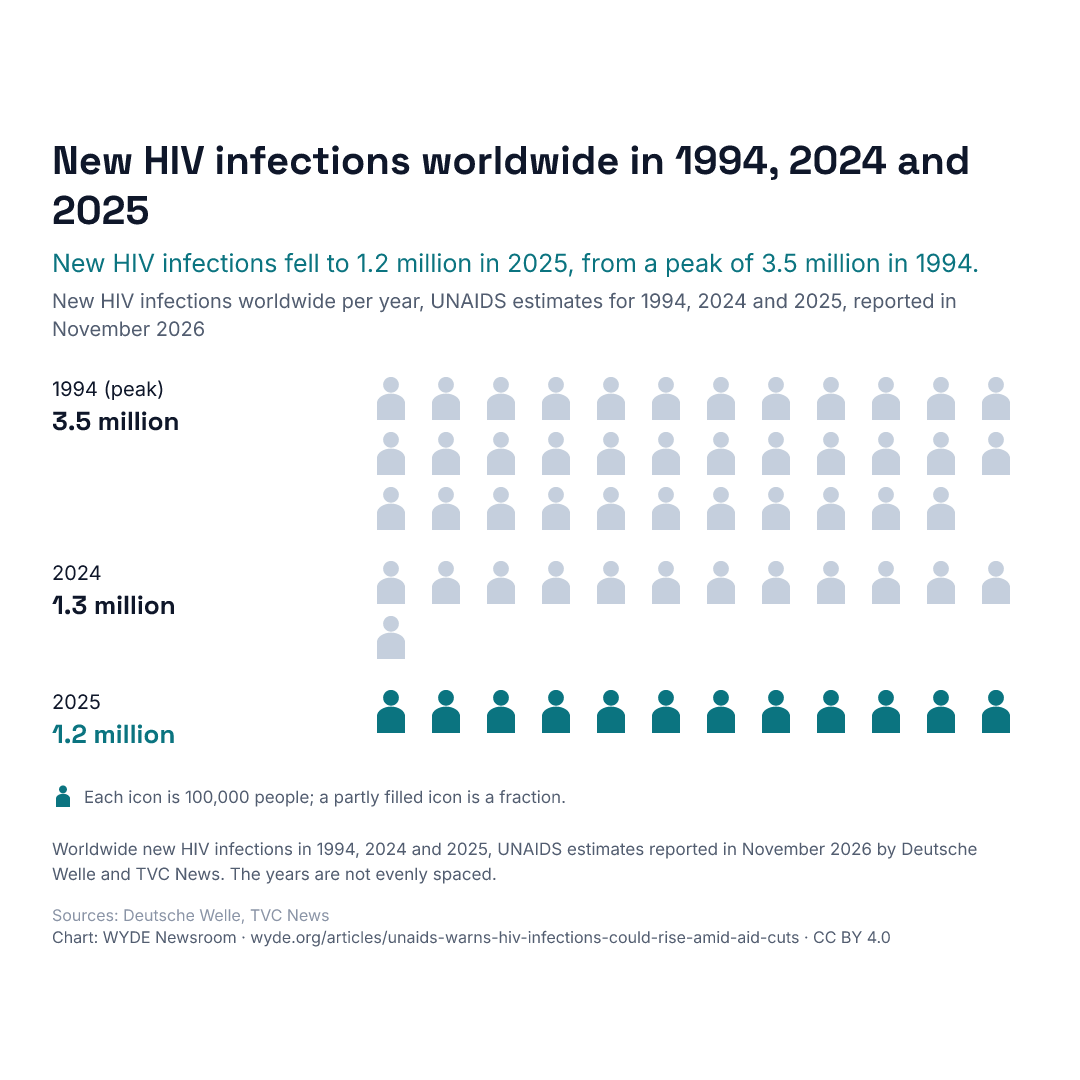
The drop from 2024 to 2025 was about 100,000 new infections. The drop from the 1994 peak to 2025 was about 2.3 million. Neither report states either difference.
AIDS-related illnesses killed approximately 570,000 people worldwide in 2025, compared with 600,000 in 2024 and 1.3 million in 2010. Deutsche Welle put the daily toll at almost 1,600 people a day.
The HIV treatment gap in 2025
Neither outlet reports how many people living with HIV were not receiving treatment. The UNAIDS figures imply the answer. Stated as a share, about 78% of people living with HIV were receiving treatment in 2025.
Why UNAIDS links the 2027 warning to US funding cuts
"The impact of the United States government funding cuts has been especially dramatic given the reliance of many countries on its support for core HIV programs," UNAIDS said. Deutsche Welle reported that the United States remains the largest international donor for HIV programs, even though its contributions dropped by 26% between 2024 and 2025. Deutsche Welle also reported that disbursements from the Global Fund to Fight AIDS, Tuberculosis and Malaria dropped 13% in 2025.
"The world is sleepwalking into a preventable crisis," said Winnie Byanyima, executive director of UNAIDS. She also told Reuters that the world is on the cusp of ending AIDS, but that cuts threaten those gains. She said the agency did not have the data yet, but saw all the signs of reversals. She predicted that data released in 2027 would begin to reflect a rise in new HIV infections.
UNAIDS warned that the full consequences of the 2025 funding reductions might not yet be reflected in current estimates. TVC News reported that this suggests the worst effects could still lie ahead.
The 2030 goal to end AIDS and new HIV prevention
The United Nations set a goal in 2015 to end AIDS as a public health threat by 2030. "The world has moved closer towards controlling the HIV pandemic, but changes in funding and resulting service disruptions jeopardize this progress," the UNAIDS agency said in its annual global update. UNAIDS also said ending AIDS as a public health threat by 2030 is still possible, but warned that disruptions to essential services and declining financial support could undermine that goal. Lenacapavir, an injection given just twice a year, has marked another turning point in HIV prevention, UNAIDS said.
People Also Ask
Who is the current head of UNAIDS?
Winnie Byanyima is the executive director of UNAIDS. Deutsche Welle quoted Winnie Byanyima telling Reuters that cuts threaten to take away the gains against AIDS.
How many people die of AIDS each year?
About 570,000 people died from AIDS-related illnesses worldwide in 2025, according to UNAIDS. That is down from 600,000 in 2024 and 1.3 million in 2010.
What is lenacapavir?
Lenacapavir is an injection given just twice a year. UNAIDS said lenacapavir has marked another turning point in HIV prevention.
Can AIDS be ended as a public health threat by 2030?
UNAIDS said ending AIDS as a public health threat by 2030 is still possible. The United Nations set that 2030 target in 2015, and UNAIDS warned that disruptions to essential services and declining financial support could undermine the target.
Sources: Deutsche Welle, TVC News.